
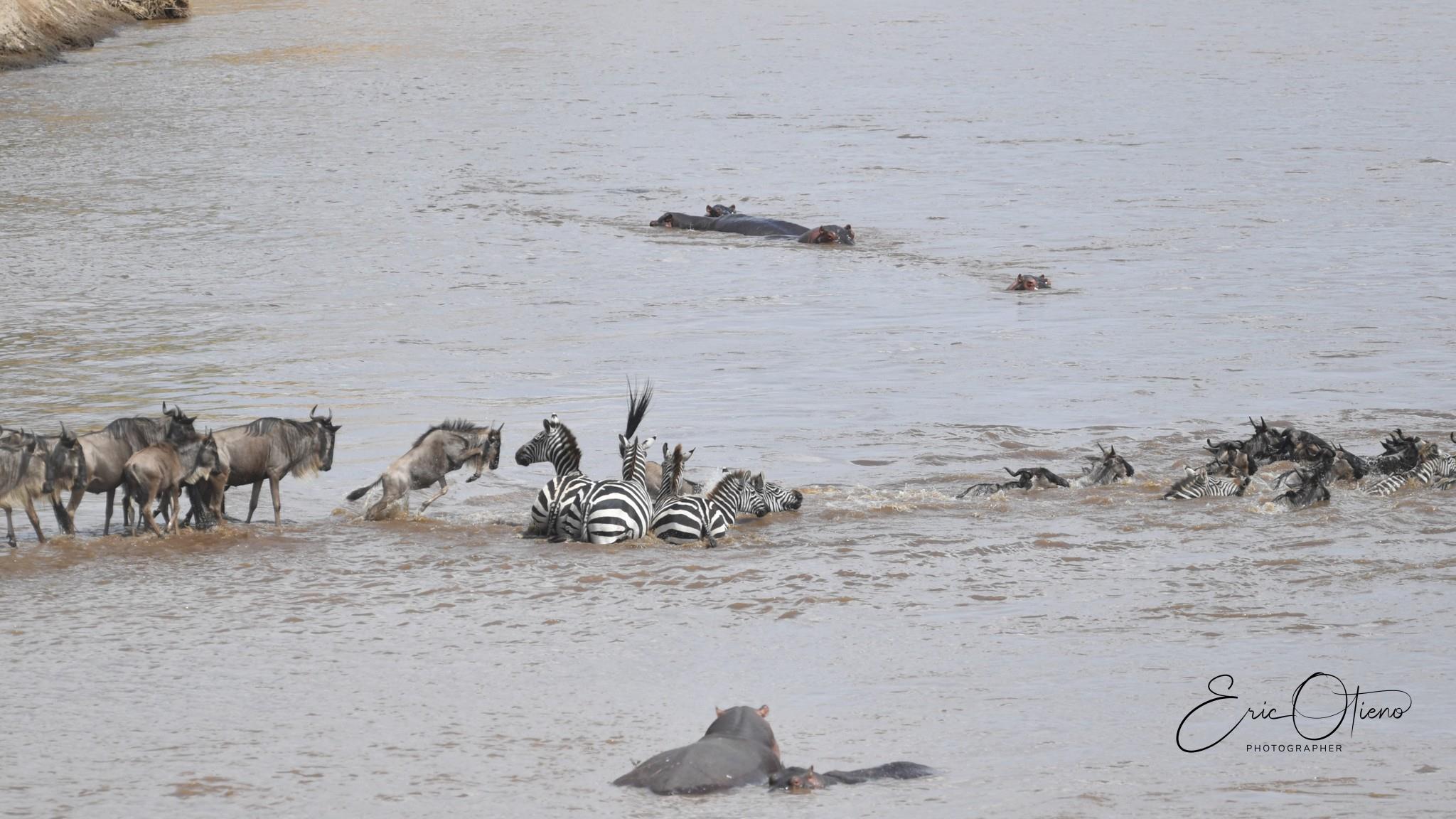
The Maasai Mara is crossed by several important watercourses, the best known being the Mara River and the Talek River. The Mara River is part of the larger Serengeti-Mara ecosystem and is famous for the dramatic, but unpredictable, crossings attempted by migratory wildebeest and zebra in some seasons.
Which rivers flow through Mara reserve?
The Mara River is the best-known river in the Maasai Mara and is central to the wider Serengeti-Mara ecosystem. The Talek River is another important watercourse in the reserve.
These rivers shape habitat, support hippos and crocodiles and provide water for many other animals. The Mara River also becomes famous during periods when migrating herds attempt crossings.
A river crossing is never guaranteed. Water levels, herd position and timing determine whether one happens while you are present.
Why Maasai Mara changes the answer
Kenya's best-known savannah reserve, part of the wider Serengeti-Mara ecosystem and one of East Africa's strongest areas for big-cat viewing. Open plains, river systems, escarpments and scattered woodland create a wide range of habitats and photographic backgrounds.
The reserve is rewarding year-round; the long dry period and the seasonal movement of wildebeest can create intense wildlife concentrations, while green months offer fewer vehicles in many areas, lush scenery and excellent birding.
Context makes a cultural stop more meaningful
A short visit becomes more useful when travellers understand why a place, practice or object matters. Ask questions respectfully and allow hosts to explain their own experience.
ESA Safaris can help place cultural activities into the itinerary without turning them into rushed photo stops.
What this means for your itinerary
The rivers are important throughout the year, not only during migration. They support riverine vegetation, provide water and create habitat for hippos, crocodiles, birds and many other animals.
A river crossing should never be treated as a scheduled show. Herds may wait, turn back or cross at a different point. A good Mara itinerary focuses on the whole ecosystem while allowing time near the river when seasonal conditions make that worthwhile.
Visit as a guest, not as a spectator
Community and cultural experiences are strongest when they are hosted respectfully. Ask before photographing people, listen to local guidance and avoid treating living culture as a performance frozen in the past.
Clothing, language, work and traditions change over time. A good visit leaves room for contemporary life as well as history.
Before you book or travel
- Ask before photographing people or entering private spaces.
- Follow local advice on dress and behaviour at religious or community sites.
- Choose hosted visits rather than arriving in communities unannounced.
- Buy crafts through transparent channels when supporting local makers is important to you.
Frequently Asked Questions
Can I take photographs during a cultural visit?
Ask first. Permission can vary by person, place and activity, and some religious or private moments should not be photographed.
What should I wear?
Follow local guidance and dress more conservatively at religious or community sites. Your guide can advise for the places included in your itinerary.
Is bargaining always expected?
No. It depends on the market and seller. Bargain respectfully where it is customary and avoid treating every purchase as a contest.
How can I support local communities responsibly?
Use hosted experiences, buy directly from makers where possible and follow transparent arrangements rather than handing out money or gifts without context.
Plan this experience with ESA Safaris
Use this guide as a starting point, then ask ESA Safaris to confirm the details for your actual dates and itinerary. The final plan should reflect the traveller, the season and the services being booked.


