Animals that use open habitat and occur in larger numbers are generally easier to find than solitary or secretive species.
Which animals are easiest to find?
The animals that are easiest to see depend on habitat and season. wildlife and scenery that vary by park, reserve and season. Herding species and animals using open habitat are generally easier to locate than solitary cats or wide-ranging carnivores.
Even common species deserve time. Watching giraffes feed, elephants communicate or zebras react to a predator can be more revealing than rushing past them in search of a rarer animal.
Your guide will adapt the search to recent conditions. No species should be presented as guaranteed, but knowing the landscape greatly improves the chances of finding animals in the places they are most likely to use.
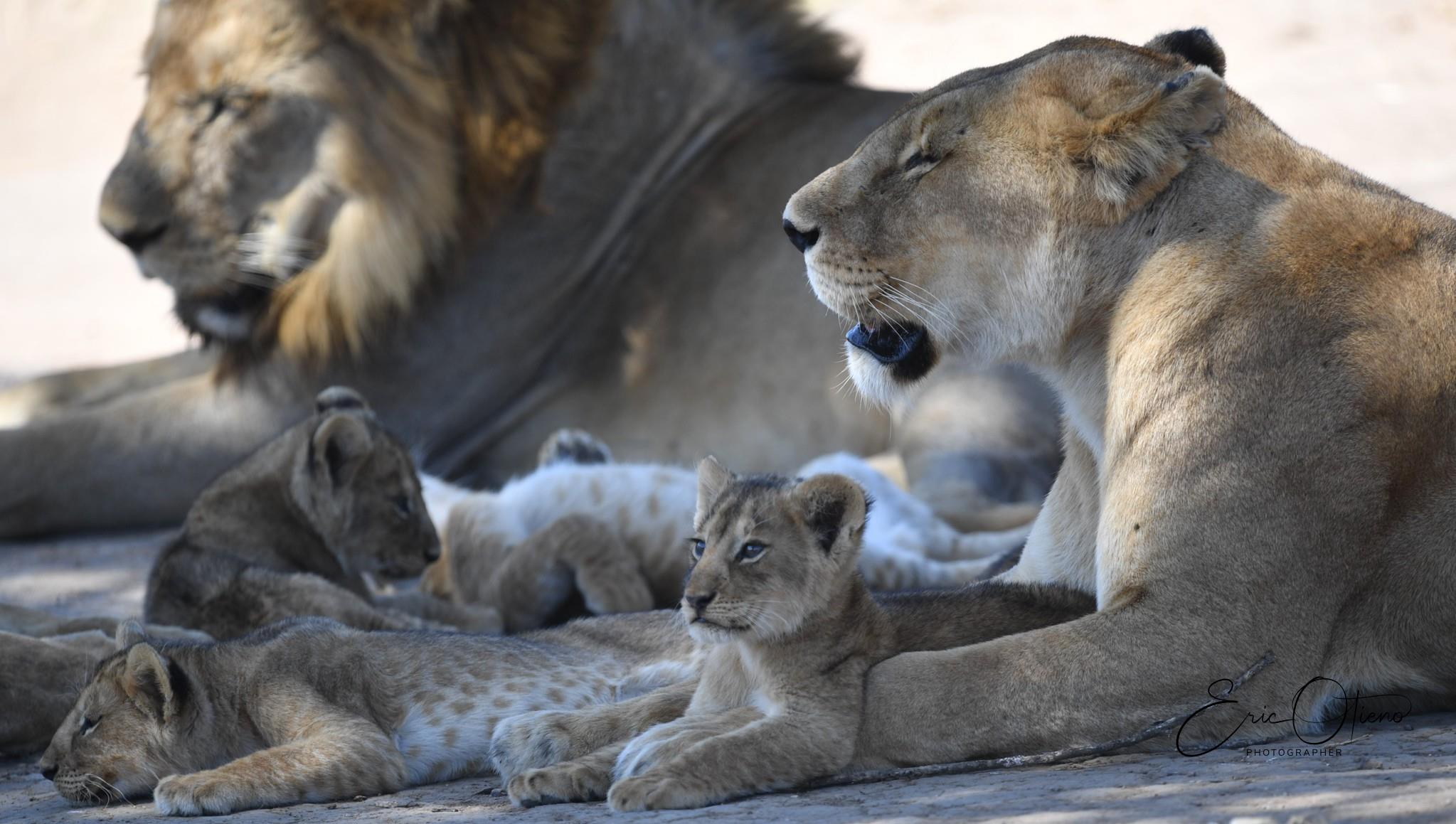
Where can I see lions?
Lions are most reliably sought in established lion habitats with healthy prey populations, including the Maasai Mara, Serengeti, parts of Amboseli and several other East African parks and conservancies. Within a reserve, guides often check open grassland, drainage lines, shade and areas where prey has concentrated.
Lions can be surprisingly difficult to see when they are lying low in grass or thickets. Fresh tracks, alarm calls and the behaviour of other animals help guides narrow the search.
Choose the destination for the whole safari rather than for one promised lion sighting. A good itinerary gives you repeated opportunities across several game drives.
Where can I see leopards?
Leopards occur in many East African safari areas, but their solitary and secretive nature makes them less predictable than herd animals. Guides often scan riverine woodland, rocky areas, large trees and the edges of thickets, especially where prey is abundant.
A leopard may be close and still remain invisible. Alarm calls from monkeys or antelopes, fresh tracks and knowledge of an individual's territory can help.
The Maasai Mara, Serengeti, Samburu and several conservancies can offer strong opportunities, but no ethical operator should promise a leopard on a particular drive.
Habitat often explains what you see
Open grassland, riverine forest, wetlands and dry bush support different animals. That is why the same species may be common in one area and difficult to find in another.
When wildlife is a major priority, tell ESA Safaris which species or behaviours interest you. The route can then be designed around suitable habitats and seasons without promising a sighting that nature cannot guarantee.
What this means for your itinerary
Lions are regularly sought in areas such as the Maasai Mara and Serengeti. Leopards can be present in the same ecosystems but are harder to see because they are solitary and use cover.
Give the guide time to track rather than expecting every predator in one drive.
Before you book or travel
- Tell ESA Safaris which species or behaviours interest you most, while keeping expectations realistic.
- Ask how much time the itinerary allows in the wildlife area, not only how many destinations it names.
- Pack binoculars if you enjoy observing behaviour rather than relying only on the guide's equipment.
- Follow the driver-guide's decisions on distance, positioning and when to move on.
Frequently Asked Questions
Is an early game drive always better?
Early morning is often productive because temperatures are cooler, but good sightings can happen at any time. The best schedule depends on the destination and conditions.
Can I ask the guide to move closer?
You can explain what you hope to see or photograph, but the driver-guide decides the safe and permitted distance. Wildlife welfare and park rules come first.
Do binoculars make a difference?
Yes. Binoculars help with birds, distant animals and behaviour that is easy to miss with the naked eye, even when you also carry a camera.
Are wildlife sightings guaranteed?
No. A responsible safari operator cannot guarantee a wild animal. Guides improve the chances through local knowledge and fieldcraft, but weather, habitat and animal movement still matter.
Make the itinerary fit the traveller
Share your travel dates and wildlife priorities with ESA Safaris. A well-planned route can improve the quality of your game-viewing time while keeping expectations honest and responsible.