
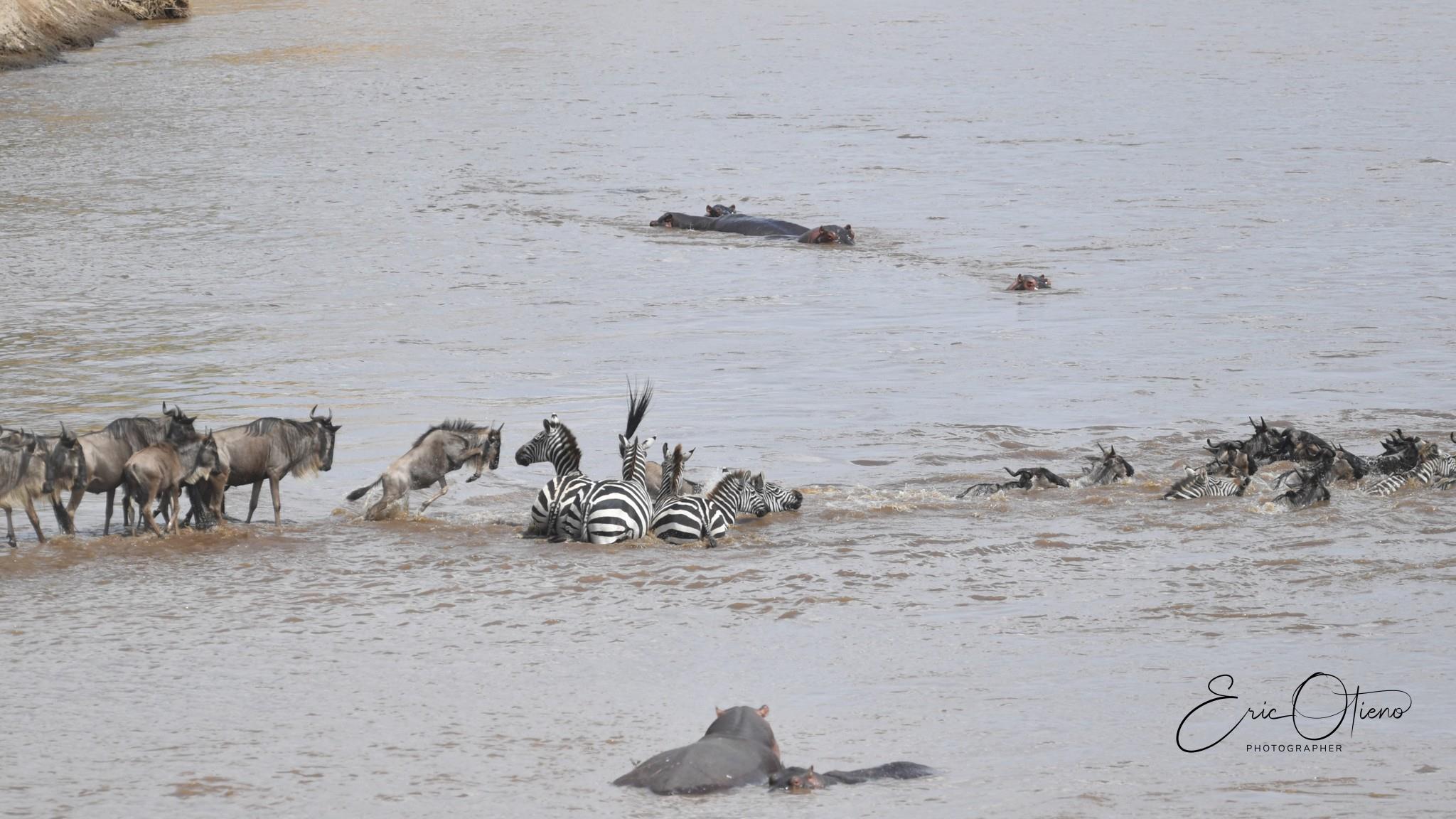
Zebras and wildebeest often move in the same landscapes because both benefit from group vigilance and use grasslands in complementary ways.
Why do Zebras and wildebeest stay together?
Zebras and wildebeest often benefit from feeding and moving in the same areas because they use grass differently and together create more eyes and ears for detecting danger.
The relationship is not a formal partnership in every moment. Herds still make their own decisions, but mixed groups can improve awareness and use the grassland efficiently.
Can someone join the tour halfway?
Joining a tour halfway can sometimes be arranged, particularly on a private itinerary, but the meeting point must fit the route and transport plan.
On a fixed group departure, joining late may be impossible or may require a private transfer. Confirm the exact date, place and time before booking flights.
Will there be enough time for shopping?
Shopping time can be included when it is planned rather than left to chance between transfers. City stays and longer road journeys usually provide more opportunities than a tightly timed fly-in safari.
Tell ESA Safaris whether you want markets, craft centres or practical travel shopping so the itinerary can allow realistic time.
Good sightings begin with respectful distance
An ethical safari does not require crowding an animal. The guide should position the vehicle within the rules of the destination and allow the animal room to move.
Longer lenses, patience and good fieldcraft produce better experiences than pressure for a dangerously close photograph. Guests should follow the guide's instructions when an animal changes direction or approaches the vehicle.
What this means for your itinerary
A traveller can sometimes join a tour partway through, but it depends on route, transport and where the group is at that time.
Shopping time should be planned rather than assumed, especially on itineraries with flights or long transfers.
Wildlife does not follow a timetable
Guides improve your chances through experience, tracking and knowledge of the landscape, but wild animals choose where to move. Weather, water, prey, breeding and disturbance all influence a sighting.
The best game drives allow enough time to observe behaviour. A quiet twenty minutes with one animal can reveal more than a hurried search for a longer species list.
Before you book or travel
- Tell ESA Safaris which species or behaviours interest you most, while keeping expectations realistic.
- Ask how much time the itinerary allows in the wildlife area, not only how many destinations it names.
- Pack binoculars if you enjoy observing behaviour rather than relying only on the guide's equipment.
- Follow the driver-guide's decisions on distance, positioning and when to move on.
Frequently Asked Questions
Are wildlife sightings guaranteed?
No. A responsible safari operator cannot guarantee a wild animal. Guides improve the chances through local knowledge and fieldcraft, but weather, habitat and animal movement still matter.
Is an early game drive always better?
Early morning is often productive because temperatures are cooler, but good sightings can happen at any time. The best schedule depends on the destination and conditions.
Can I ask the guide to move closer?
You can explain what you hope to see or photograph, but the driver-guide decides the safe and permitted distance. Wildlife welfare and park rules come first.
Do binoculars make a difference?
Yes. Binoculars help with birds, distant animals and behaviour that is easy to miss with the naked eye, even when you also carry a camera.
Turn the answer into a workable itinerary
If wildlife is the main reason for your trip, tell ESA Safaris which habitats and species interest you most. The team can shape the route around the right regions and enough time in the field, without pretending that wild animals can be scheduled.


